
Climate and geography
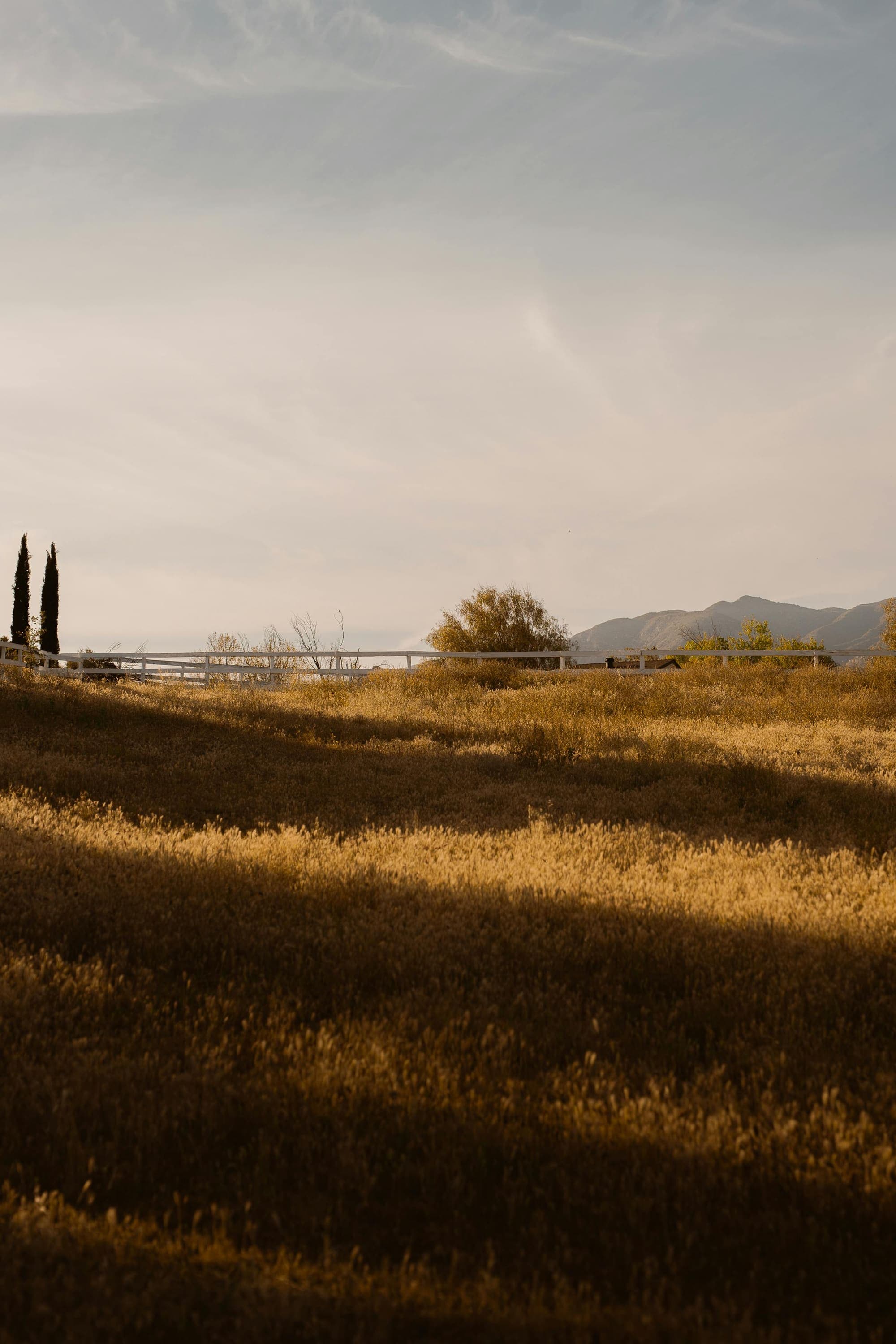
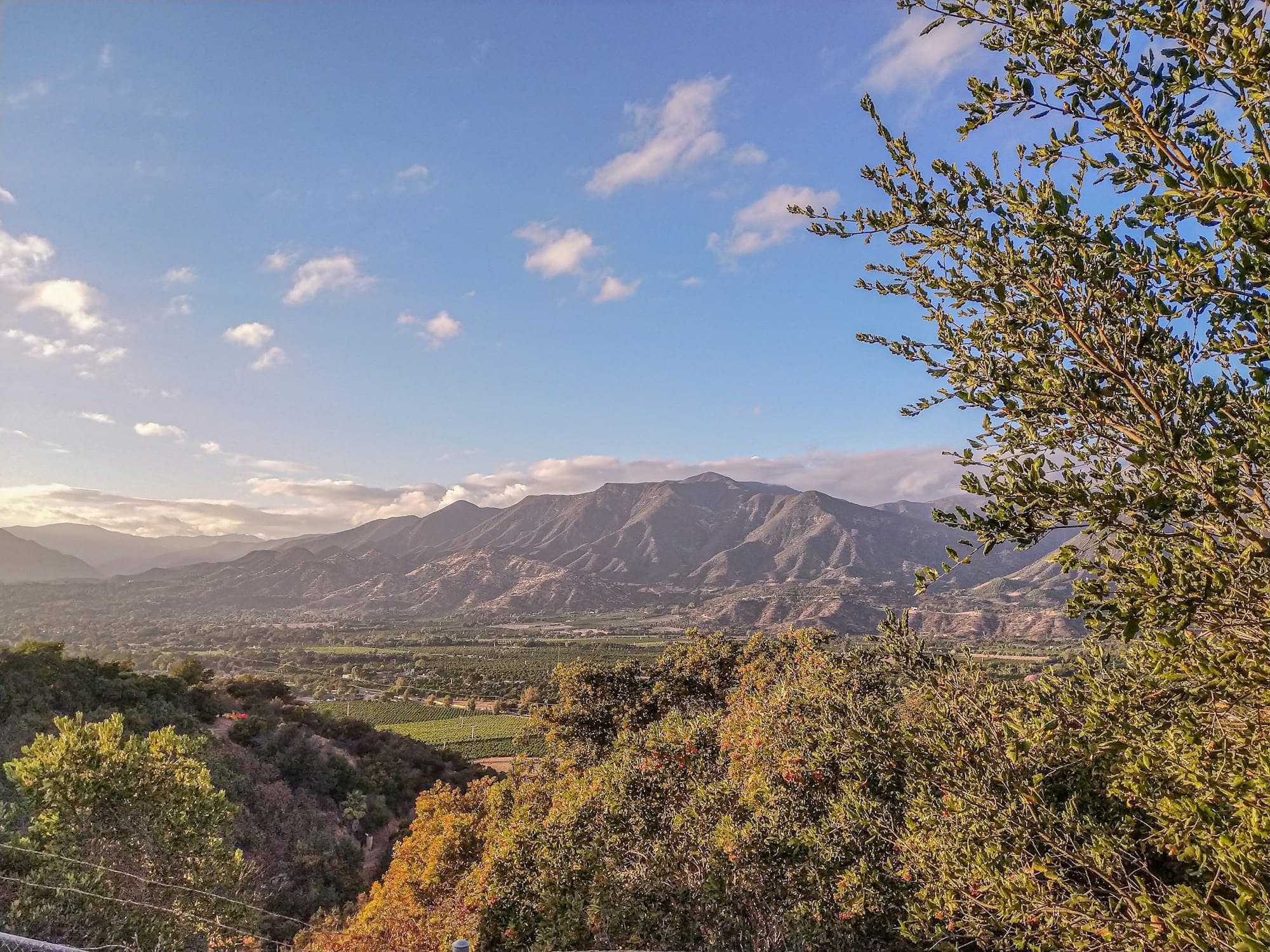
Ojai sits in an east-west valley about fifteen miles inland from the coast at Ventura, walled by the Topa Topa range to the north and the Sulphur Mountain ridge to the south. The orientation matters: most California valleys run north-south and channel the marine air directly inland; Ojai's east-west geometry creates a partial rain shadow and a genuinely different microclimate from anywhere on the coast. Summers are warm to hot; interior valley days frequently run ten to fifteen degrees above Ventura. Winters are cool, with overnight lows that occasionally dip into the high thirties on the East End. The marine layer reaches Ojai later in the day than it reaches Ventura and burns off earlier, when it arrives at all; many summer mornings the village is in full sun while downtown Ventura is gray. The Pink Moment, the alpenglow that lights the Topa Topas at sunset, is the valley's most photographed feature and is genuinely as visible as photos suggest. Santa Ana wind events in fall reverse everything: hot dry offshore air, single-digit humidity, the conditions that drove the 2017 Thomas Fire across the valley.
Ojai is a different lifestyle category, and the practice has worked across this valley for 25+ years.
The character of the city
Ojai is one village core (Ojai Avenue and Signal Street, with the Spanish-revival arcade running the south side of the main intersection) plus a small constellation of named sub-areas: Meiners Oaks west of the village, the Arbolada north, Mira Monte and Oak View further west toward Lake Casitas, the East End east of the Y-intersection where Ojai Avenue meets Reeves Road. The village does not have a chain store. It has bookstores, an independent grocery, a few good restaurants, the Ojai Valley Inn at the western edge, and a population that generally prefers it the way it is. The agricultural economy is real (citrus, olives, lavender, avocado) and visible in the landscape rather than ornamental. There is also a long-running spiritual and intellectual layer: Krotona Institute of Theosophy moved to its hill above Meiners Oaks in 1924; the Krishnamurti Foundation maintains the Pepper Tree Retreat and Educational Center on the East End where Krishnamurti spoke at the Oak Grove for decades; Meditation Mount sits above the East End. These are factual elements of the valley's identity, not promotional ones. Buyers should know they exist because they shape the social fabric, but the village does not market itself on them.
Commute and access
Ojai is reached primarily via Highway 33 north from the 101 at Ventura, a flat, easy fifteen-mile drive that takes about twenty-five minutes off-peak. The alternative is Highway 150, which crosses the ridge from Santa Paula and gives you the Lake Casitas view, but the route is two-lane, slower, and was closed indefinitely by a landslide in early 2024 between Santa Paula and Ojai. Verify Highway 150's status before factoring it into your commute math. Highway 33 north of Ojai becomes the Maricopa Highway, which climbs into the Los Padres National Forest on tight switchbacks: beautiful but not a daily commute road. From Ojai to downtown LA via the 33 and the 101 is about ninety miles and ninety minutes off-peak; in Friday afternoon traffic, two and a half hours is common. There is no train service to Ojai. The nearest Pacific Surfliner station is in downtown Ventura, twenty-five minutes south. For buyers with regular LA work, the practical pattern is drive to Ventura, ride the Surfliner, return: workable two or three times a week, exhausting five.
Schools, plainly
Ojai Unified School District covers the valley with a small set of schools: Topa Topa Elementary on Mountain View, Meiners Oaks Elementary, San Antonio Elementary on the East End, Matilija Junior High, Nordhoff High, and Chaparral High as the alternative. The district is small and the catchments are small enough that buyers can generally confirm which school an address feeds with a phone call to the district office. The reputation is solid and the parent involvement is high; what matters more than the district average is the fit of the specific school's culture, which varies meaningfully across the four primary sites. The Oak Grove School (private, on the Krishnamurti Foundation land) and the Thacher School (private boarding, East End) are the two well-known independent options and operate on entirely different admissions calendars from the public district. If high school assignment matters to you, Nordhoff is the comprehensive public option and the school to evaluate carefully.
Housing stock, broadly
Ojai housing splits along three lines. The village core and the Arbolada carry early twentieth-century Spanish revival, Craftsman bungalows, and a layer of older California cottages on small lots: quiet streets, walkable to the village, generally under an acre. The East End is larger parcels: 1920s ranches, mid-century estates, custom contemporary builds on multi-acre orchard parcels, and a meaningful share of working agricultural properties with citrus or olive groves still in production. The West End (Meiners Oaks, Mira Monte, Oak View) is more modest and more varied: small ranch houses, mid-century tract pockets, the occasional larger parcel. Walled compounds with private gates exist mostly on the East End and a few specific Arbolada streets. Buyers who want a working orchard look East End. Buyers who want walkable village access on a smaller lot look at the village proper or the Arbolada. Buyers prioritizing price look West End and accept the trade-off in walkability.
What people don't tell you
Four things. First, fire is the dominant planning constraint. The 2017 Thomas Fire burned across the entire valley and put it under mandatory evacuation; the valley remains a high fire-severity zone, the regrowth is well underway, and another major fire is a question of when, not if. Insurance has tightened materially. California FAIR Plan plus a wraparound policy is now common rather than exceptional, and premiums on multi-million-dollar estates routinely run into the high four and low five figures annually. Solve insurance during escrow, not after. Second, water is a parcel-specific question. Many East End properties run on private wells rather than municipal water; well capacity, water quality, and seasonal yield should be tested independently during inspection. Drought years see voluntary and occasionally mandatory rationing through Casitas Municipal Water District for parcels on municipal supply. Third, commercial services are genuinely thin. There is no large grocery in the village; for hardware, big-box, or specialty medical, you drive to Ventura. Buyers who need walkable urban density will find Ojai isolating after the first month. Fourth, short-term rental rules in the city of Ojai are restrictive. The city has tightened STR permitting substantially over the last several years, and any STR-investment underwriting should start with a current call to the city, not with platform booking data.
Who the city actually fits, and who it doesn't
Ojai fits buyers who want valley quiet, agricultural setting, and a small village with real (not curated) commerce, and who can absorb the fire and water realities as part of the trade. It fits buyers whose work is fully remote or hybrid two days in LA via the drive-Ventura-Surfliner pattern. It fits buyers who actively want a working orchard, a horse property, or a walled compound at the architectural scale Ojai allows. It does not fit buyers who need walkable Main Street commerce within five minutes (Ventura proper fits; Ojai doesn't), who need consistent commercial density for medical or specialty services, who need a four-week PCS-window search (Ojai inventory is too thin and too off-market for short timelines), or whose comfort with fire and insurance complexity is limited. The valley also doesn't fit buyers expecting Santa Barbara amenity at a discount; the lifestyle is meaningfully different, and that difference is usually the point.