
Home/Guides/Living in Ventura

Living in Ventura, plainly described.

I'm asked often what makes Ventura different from the other small coastal cities along the 101, and the honest answer is that Ventura is a working downtown that happens to sit on the Pacific. It's not a resort town pretending to be a city. It's a real city (fairgrounds, harbor, mission, surf) that has been quietly itself for two centuries. The practice has worked across these neighborhoods for 25+ years, and the conversation below is the one I have with buyers who are trying to understand the city before any specific property is on the table.

Living in Ventura
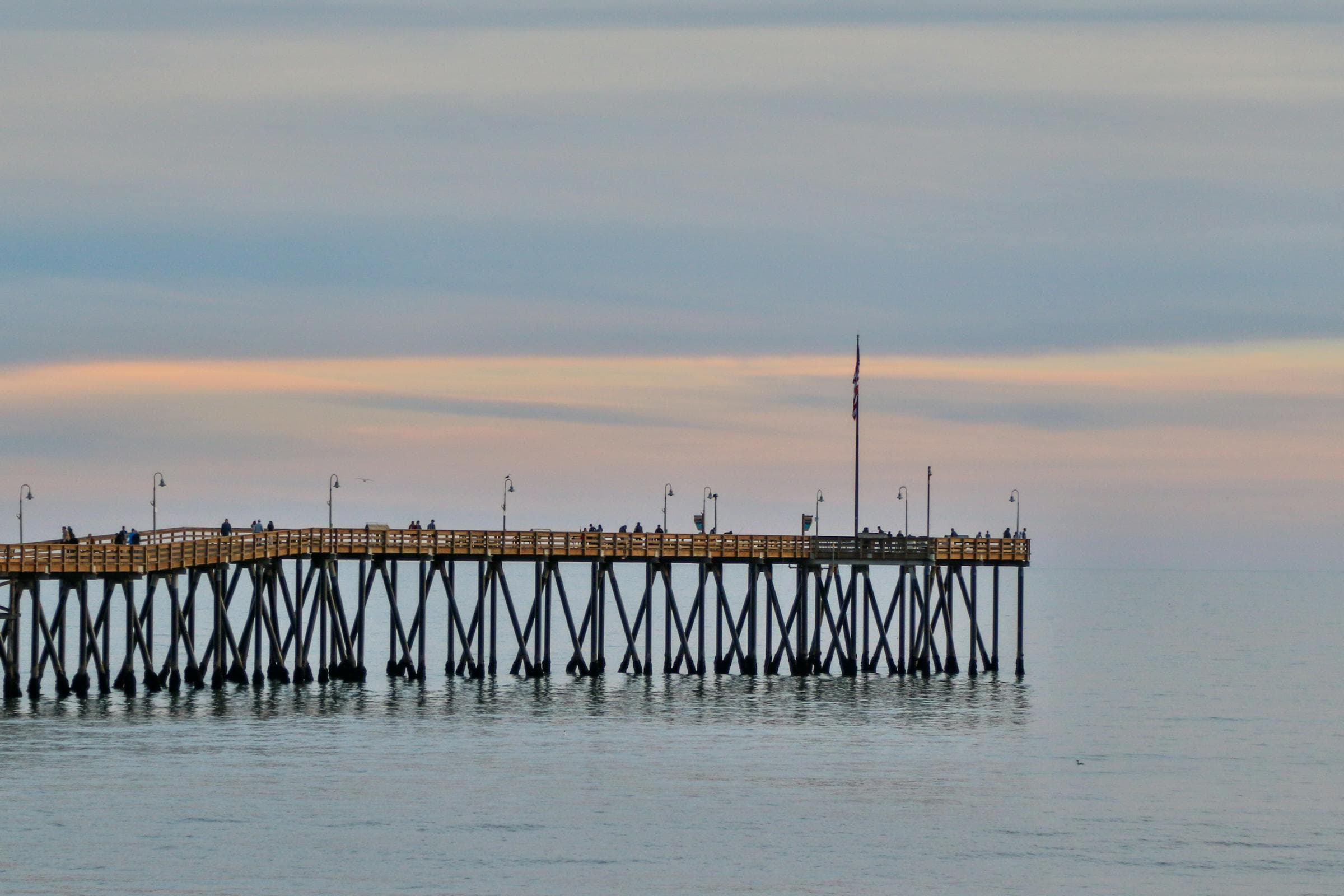
Ventura Pier · twilight
01Climate and geography

Climate and geography

Ventura sits in a narrow coastal strip pinned between the 101 and the Pacific, with the foothills rising directly behind downtown. The marine layer is the dominant climate fact: from roughly late May through early August, mornings start gray and clear by midday. The local shorthand is May Gray and June Gloom, and it's accurate. The fog burns off later downtown and at Pierpont than it does two miles inland in east Ventura. By afternoon the temperature spread between Pierpont and Camarillo can be ten or fifteen degrees on the same day. Winters are mild and wet in the wettest years, drier than people expect in most. Santa Ana wind events in the fall reverse the marine pattern entirely: hot, dry offshore wind that pushes humidity into the single digits and creates the fire conditions that drove the 2017 Thomas Fire. Anyone considering Ventura should understand that the climate is genuinely different by neighborhood. The hill above downtown gets the view; the lanes get the surf and the fog; east Ventura gets the heat.

02The character of the city

The character of the city

Ventura's character is unhurried and not performatively so. Main Street runs along a bluff above the harbor, anchored at one end by the Mission and at the other by a working pier and a fairgrounds that still actually fairs. The downtown commerce is a mix of long-time bookstores, surf shops, restaurants that have been there for decades, and a quieter layer of newer galleries and design-led spaces. The pace is slower than Santa Barbara, less curated than Ojai, less suburban than Camarillo. Saturday morning on Main Street feels different than any other coastal California city of comparable size: there's actual local commerce happening, not just out-of-town visitors browsing. What Ventura is not: it is not Santa Barbara with a discount. The architecture, the budgets, and the social ecosystem are different. Buyers coming from Santa Barbara expecting a near-equivalent are usually disappointed in the first week and reconciled in the second.

It is not Santa Barbara with a discount. The architecture, the budgets, and the social ecosystem are different.
03Commute and access

Commute and access

The 101 runs through Ventura north to south. Downtown to Santa Barbara is roughly thirty miles and forty-five minutes off-peak, ninety minutes during the worst of the Friday afternoon Santa Barbara-bound exodus. Downtown to downtown LA is sixty-five miles and eighty minutes off-peak, two hours plus on a bad commute day. Highway 126 east connects to Santa Paula, Fillmore, and ultimately the I-5: useful for buyers with family inland, less useful for daily commute. Highway 33 north climbs to Ojai in twenty-five minutes. For rail: the Pacific Surfliner serves the Ventura station at 39 East Harbor with about ten daily trains running San Luis Obispo to San Diego, and Metrolink's Ventura County Line currently terminates at Montalvo / Ventura-East with announced plans to extend to the downtown station. The Rail 2 Rail codeshare program lets Metrolink Ventura County Line ticket holders ride Pacific Surfliner trains between LA and Ventura, which is genuinely useful for occasional LA work without driving. Parking downtown is the real friction. Most blocks are street-only, and properties with off-street parking carry a meaningful premium for that reason.
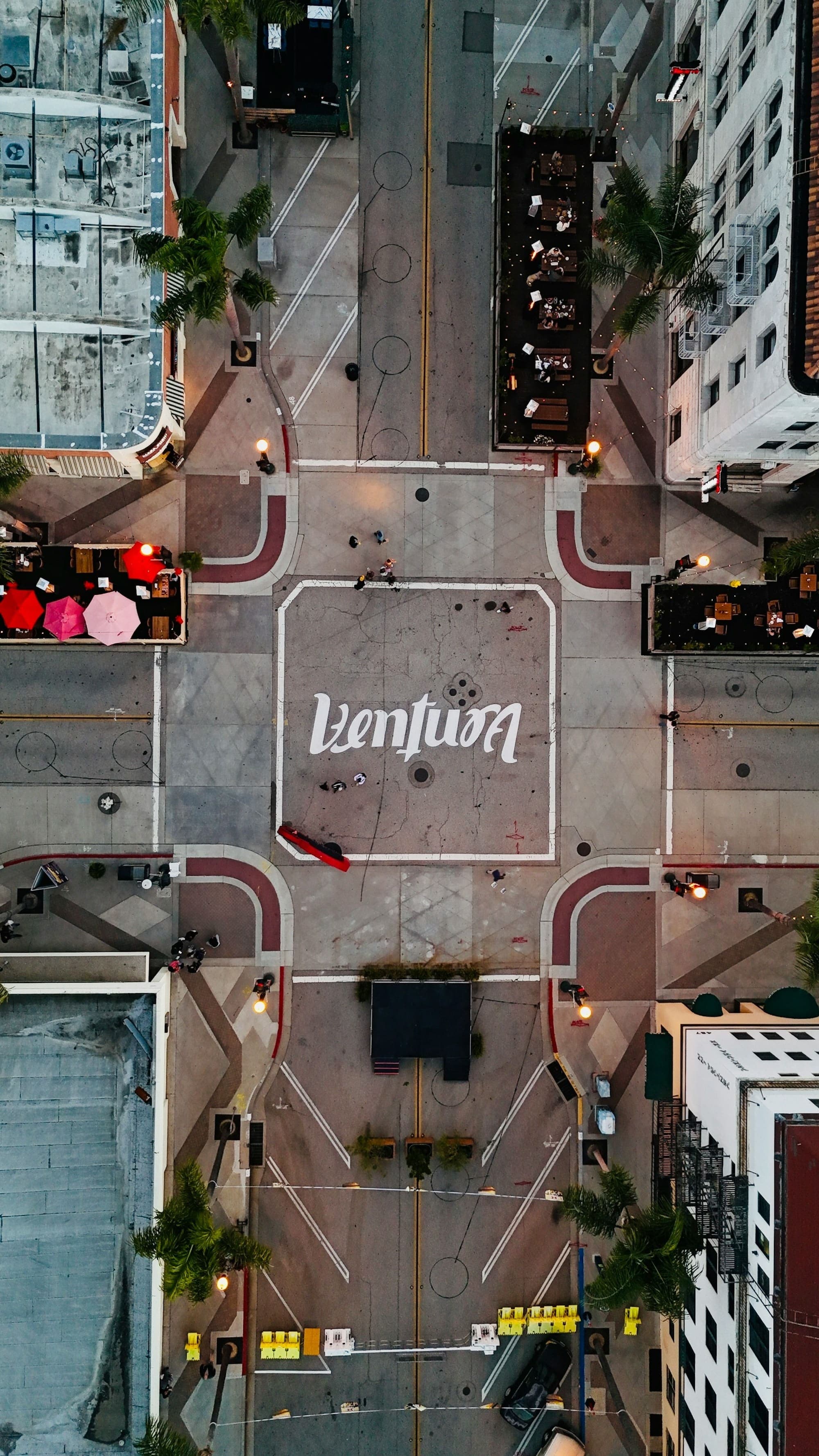
Downtown Ventura's Main Street running along the bluff above the harbor
Downtown Ventura · Main Street
04Schools, plainly

Schools, plainly

Ventura Unified School District covers the city with twenty-six school sites: fourteen K-5 elementaries, three K-8 schools, four middle schools, five high schools, and an alternative K-8 program. The district trustee boundaries were drawn from 2020 census data and don't realign until 2032. The reputation is solid and locally respected; what matters more than the district average is the specific catchment, because the elementary boundaries don't follow the neighborhood lines outside buyers expect. Foothill Technology and Ventura High serve different zones with substantially different feel; Buena High is east-Ventura-centered. For families with a child entering high school, the catchment should be confirmed at the address level before pricing decisions are finalized, not at the district level. Charter and parochial options exist alongside VUSD; the practical answer for most families is to know the assigned school, then know the next two options as well.

05Housing stock, broadly

Housing stock, broadly

Ventura's housing stock is more varied than most coastal cities of its size. The downtown core has 1920s Spanish Colonial alongside 1940s and 1950s Craftsman bungalows, with the Hobson Heights and Ondulando hillside neighborhoods carrying a layer of mid-century moderns and a smaller set of newer custom builds. Pierpont, subdivided in 1925, was originally laid out with five-room beach cottages on tight thirty-by-ninety lots; most of those cottages remain because setbacks and the coastal commission overlay make significant expansion impractical. Midtown carries Craftsman bungalows and hillside Mission Revivals on the upper streets. East Ventura is largely post-war ranch and tract development from the 1950s through 1970s, which is the bulk of the city's family-sized inventory in conventional layouts, with the Telegraph Road and Saticoy corridors serving as the largest tract pockets. The harbor side, between Seaward and Spinnaker, has a smaller layer of 1970s and 1980s townhouse and condominium product oriented to the marina. Buyers who want walkable Main Street commerce within five minutes look at downtown or the streets immediately above it; buyers who want surf at the door look at Pierpont and accept the lot constraints that come with it; buyers who need three or four bedrooms with a yard and a two-car garage usually end up in east Ventura or one of the hillside neighborhoods above. The hillside inventory is the slowest-moving part of the city; owners hold for decades and inventory rarely exceeds ten active listings, so patience matters there.
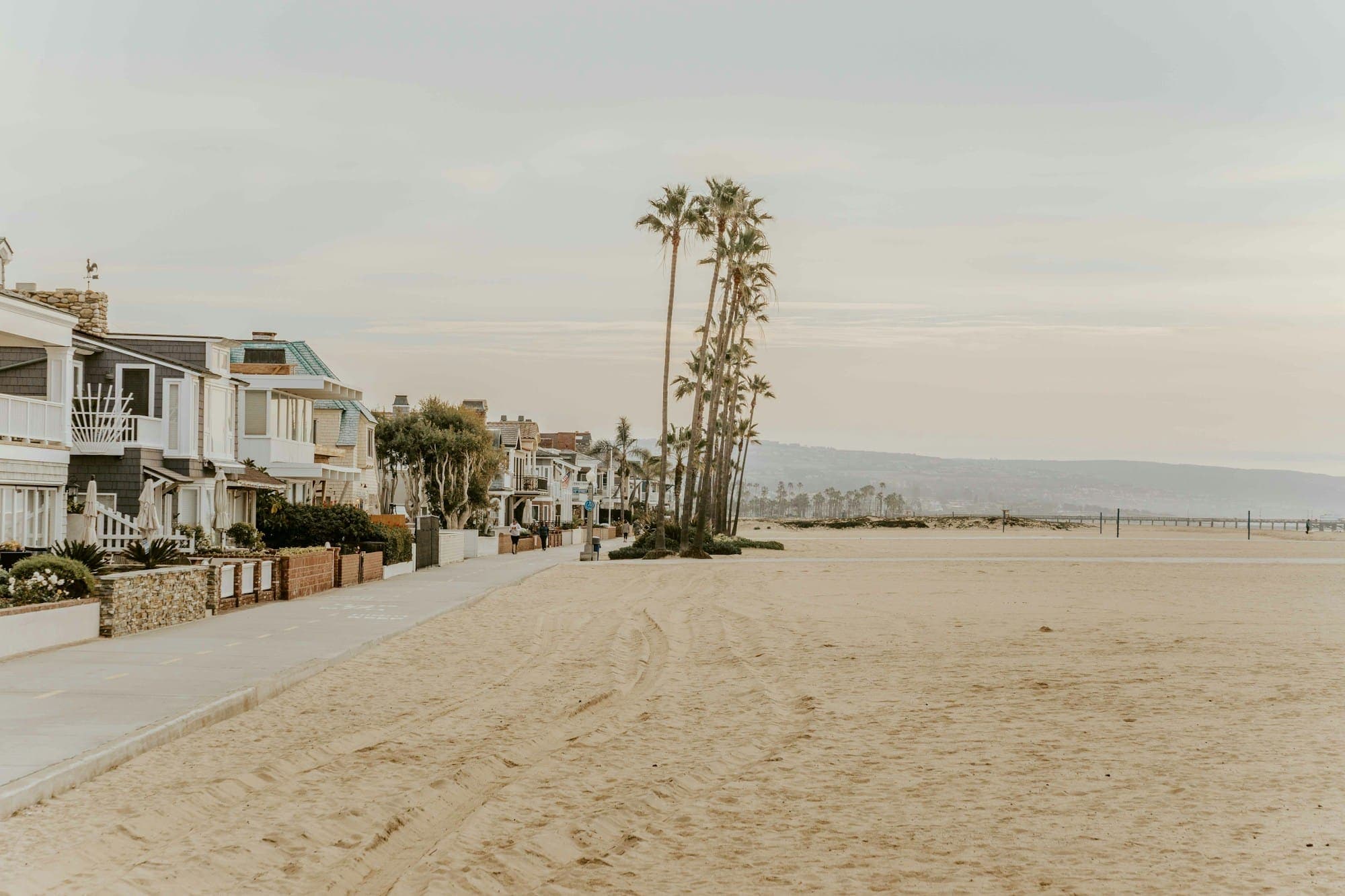
The Pierpont Lanes beach-cottage grid on the sand south of downtown Ventura
Pierpont Lanes · the surf-side grid
06What people don't tell you

What people don't tell you

Three things. First, the 101 noise corridor is real. Properties within three or four blocks of the freeway, particularly between Seaward and Telephone, get measurable highway hum at night when the marine layer is heavy and sound carries. Some buyers don't notice; some can't sleep through it. Spend a night in the property at 2 a.m. before close. Second, fire risk in the foothills is genuine. The Thomas Fire in December 2017 burned into the city limits and damaged the Ojai pumping system to the point that hydrants temporarily lost pressure. Hillside and brush-adjacent properties carry insurance complications that have intensified since 2018 and again since 2025. Verify insurability during escrow, not after. Third, the marine layer is an actual constraint on lifestyle, not just aesthetic. If you need consistent morning sun for gardening, exercise outdoors before 10 a.m., or solar generation, the marine layer's actual schedule matters, and it varies sharply between Pierpont (heaviest) and east Ventura (lightest) and the foothills (mixed, depending on elevation and exposure).

07Who the city actually fits, and who it doesn't

Who the city actually fits, and who it doesn't

Ventura fits buyers who want walkable downtown commerce, a working harbor, and access to the surf line within a short drive, and who don't need the curated luxury amenity layer of Santa Barbara or Montecito. It fits buyers prioritizing a specific architectural character (Spanish Colonial, Craftsman, beach cottage) over square footage. It fits anyone whose work allows two or three days remote with occasional LA travel via the Surfliner. It does not fit buyers who need a large lot with a pool and a four-car garage at a moderate price; that inventory exists in Camarillo and inland, not in Ventura proper. It doesn't fit buyers who want resort-style master-planned amenity (golf, gated tennis, lake access); that's Westlake Village or the Conejo Valley. And it doesn't fit a four-week PCS-window search, because central Ventura inventory is too thin and the off-market percentage is too high to source on a tight timeline.

Before you buy

What to know before buying here.

Before any specific property is on the table, this is the diligence conversation I have with buyers considering Ventura. None of it is meant to talk you out of the city — it's meant to make sure the property you fall for is one you can actually insure, finance, and live in.

What a buyer must verify

Flood zone and flood insurance

Pierpont and the close-coast streets sit in a FEMA flood zone, and for any mortgaged property in that zone flood insurance is mandatory, not optional. Pull the property's flood-zone designation early and get a real flood-insurance quote during your offer window — it is a recurring budget line, not a closing-cost footnote, and it varies enough by parcel that you should never assume a neighbor's number.

Fire risk and insurability in the foothills

Hillside and brush-adjacent Ventura properties fall within a high-fire-severity overlay, and insurance availability has tightened sharply since the 2017 Thomas Fire and again in recent years. Confirm the property is insurable — and at what cost — during escrow, not after. Some buyers find a standard carrier; others end up on the California FAIR Plan plus a wraparound policy. Either way, get the binder confirmed before you remove your contingency.

Short-term rental rules

If any part of your plan depends on short-term rental income, treat the City of Ventura's STR program as a moving target and verify it at the source. The city caps the number of short-term vacation rental permits, regulates them differently inside the coastal zone, and at times pauses new applications entirely while ordinance changes work through the California Coastal Commission — which means a property's ability to be rented short-term is governed by the permit, not by its listing potential. Permits are tied to compliance, not guaranteed to transfer freely with a sale, and the rules are revised periodically. Before you underwrite a single night of revenue, confirm the current ordinance, the permit status of the specific address, and transfer eligibility directly with the City of Ventura — platform booking data is not a substitute for a permit.

Marine-layer microclimate

Ventura's climate is genuinely different block to block. The marine layer sits heaviest at Pierpont and lightest in east Ventura. If you need consistent morning sun for solar generation, gardening, or simply how you want to live, the fog's real schedule at that specific address matters — and it is worth visiting the property in the morning, not just at midday.

Older-home systems

Much of Ventura's most characterful stock is pre-1960 — Spanish Colonial, Craftsman, post-war beach cottage. That charm comes with older roofs, electrical panels, plumbing, and sometimes foundations. Budget for the specialty inspections appropriate to the property's age (sewer-line scope, roof, electrical) rather than relying on the general inspection alone. Skipping a few hundred dollars of inspection here regularly costs buyers far more later.

Freeway-noise corridor

Properties within a few blocks of the 101 can carry measurable highway hum at night, especially when the marine layer is heavy and sound carries. It does not show up in photographs. Spend an evening near the property before you commit.

The categories of closing costs

Escrow fees

California sales close through a neutral escrow holder, and escrow charges a fee for managing the funds, documents, and timeline. In Ventura County the buyer and seller customarily split escrow, though it is negotiable in the contract.

Title insurance

A title search and an owner's and lender's title policy protect against defects in the chain of ownership. Local custom governs who pays which policy; your lender will require the lender's policy regardless.

Lender fees

If you are financing, the loan carries origination, underwriting, appraisal, and credit charges, plus any discount points you choose to buy. These vary enough between lenders that getting two written Loan Estimates is worth the effort.

Prepaids and impounds

At closing you prepay a slice of property taxes and homeowner's insurance, and most loans set up an impound (escrow) account to collect taxes and insurance monthly going forward. In a Ventura flood zone, the flood-insurance premium is part of this — which is one more reason to price flood insurance early.

County transfer tax and recording

When the deed is recorded, California's documentary transfer tax applies — long established at $1.10 per $1,000 of value (55 cents per $500) at the county level — and the county also charges recording fees. Some California cities levy an additional city transfer tax on top of that; the City of Ventura is a general-law city and does not impose its own separate transfer tax, so for a property inside the city the county rate is what applies. Rates and city-level rules can change, so treat these as the customary baseline and have your escrow officer confirm the exact figure for the specific property on the estimated settlement statement.

I have deliberately not put dollar figures on any of this. Closing costs depend on your price, your loan, your insurance, and the customary splits negotiated in your contract — and the only number worth planning around is a written one. Ask your lender for a Loan Estimate and your escrow officer for an estimated settlement statement early, and I will walk you through both line by line.

An honest read

What people don't tell you.

What works
  • Walkable downtown core: Main Street commerce, Mission, harbor, Surfliner station all within a small radius.
  • Surf and beach access within a five-to-fifteen-minute drive from most neighborhoods.
  • Specific architectural character (Spanish Colonial, Craftsman, post-war beach cottage stock) at coastal-California prices below Santa Barbara and Carpinteria.
  • Ventura Unified is a single, large district with reasonable consistency across most elementaries, simpler catchment math than Camarillo's Pleasant Valley / Oxnard Union split.
  • Pacific Surfliner offers car-free LA access for two-to-three-day remote-work patterns.
What’s hard
  • Inventory turns slowly. Twenty to thirty active single-family listings is a busy week downtown; ten is normal. The off-market percentage is the highest of the Ventura cities I cover.
  • Pierpont and the close-coast streets sit in FEMA flood zone AE; flood insurance is mandatory for any mortgaged property and is a real budget item.
  • Hillside neighborhoods are within high-fire-severity overlay; insurance availability tightened meaningfully after 2017, and the Thomas Fire is the working memory of every long-time owner.
  • Larger lots with four-bedroom inventory at moderate price are uncommon in Ventura proper; Camarillo and inland deliver that better.
  • Resort-style amenity (golf, gated tennis, lake access) does not exist in Ventura; that's Westlake Village or the Conejo Valley.
Common questions

Asked about Ventura.

What is it like to live in Ventura, California?

Living in Ventura means a working downtown that happens to sit on the Pacific. Main Street runs along a bluff above the harbor, the Mission anchors the historic core, the surf line is six blocks south of downtown, and most days the marine layer burns off by mid-morning. The pace is unhurried, the inventory is tight, and the architecture is a mix of California Spanish, beach-cottage Craftsman, and post-war modest. It is not a resort town pretending to be a city.

What are the best neighborhoods in Ventura?

Downtown Ventura sits above the harbor with walkable Main Street commerce, the Mission, and the Surfliner station within blocks. Pierpont Lanes is the surf-side beach-cottage grid directly on the sand. Hillside Ventura sits above the city with bigger lots, ocean glimpses, and easier ADU potential. Each fits a different buyer; my Ventura neighborhood guides walk through each in detail.

Is Ventura a good place to live for families?

Ventura supports households of varied compositions. The Ventura Unified School District is large and reasonably consistent. The downtown and harbor offer walkable amenities. Pierpont and the close-coast neighborhoods carry FEMA flood-zone considerations and tight lots; Hillside Ventura and east Ventura offer larger lots and more conventional housing stock. The fit depends on what stage of life and what kind of housing the household needs.

How long is the commute from Ventura to Los Angeles?

Off-peak, Ventura to West LA runs about 75-90 minutes by car. Peak inbound to downtown LA can stretch to 2 hours. The Pacific Surfliner offers ten daily trains from Ventura station with a roughly 2-hour ride to Union Station, which makes a two-or-three-day-per-week LA work pattern realistic without owning the car-commute.

How does Ventura compare to Santa Barbara for cost and lifestyle?

Ventura runs meaningfully below Santa Barbara on a per-square-foot basis for comparable architectural quality and lot size, historically 1.5x to 2x lower, though the spread has tightened since 2021. The lifestyle is less curated and less amenity-rich than Santa Barbara's: no comparable upper-village walkable luxury core, no Hope Ranch / Montecito legacy estate stock. For buyers prioritizing value, working-downtown character, and surf access over the Santa Barbara lifestyle premium, Ventura is the strongest substitute on the South Coast.

Most of my conversations about Ventura start with what people are coming from. Buyers from Santa Barbara are looking for value and walkability; buyers from LA are looking for quiet and air; buyers from out of state are looking for the version of California they remember from photographs. Ventura answers some of those questions and not others. The fit is rarely about the city itself; it's about what they're trying to leave behind.

Begin

If Ventura is on the shortlist, start with a thirty-minute conversation.

Begin a conversation

Replies within one business day — usually within four hours. Confidential, no drip sequences.

Message Geralyn