
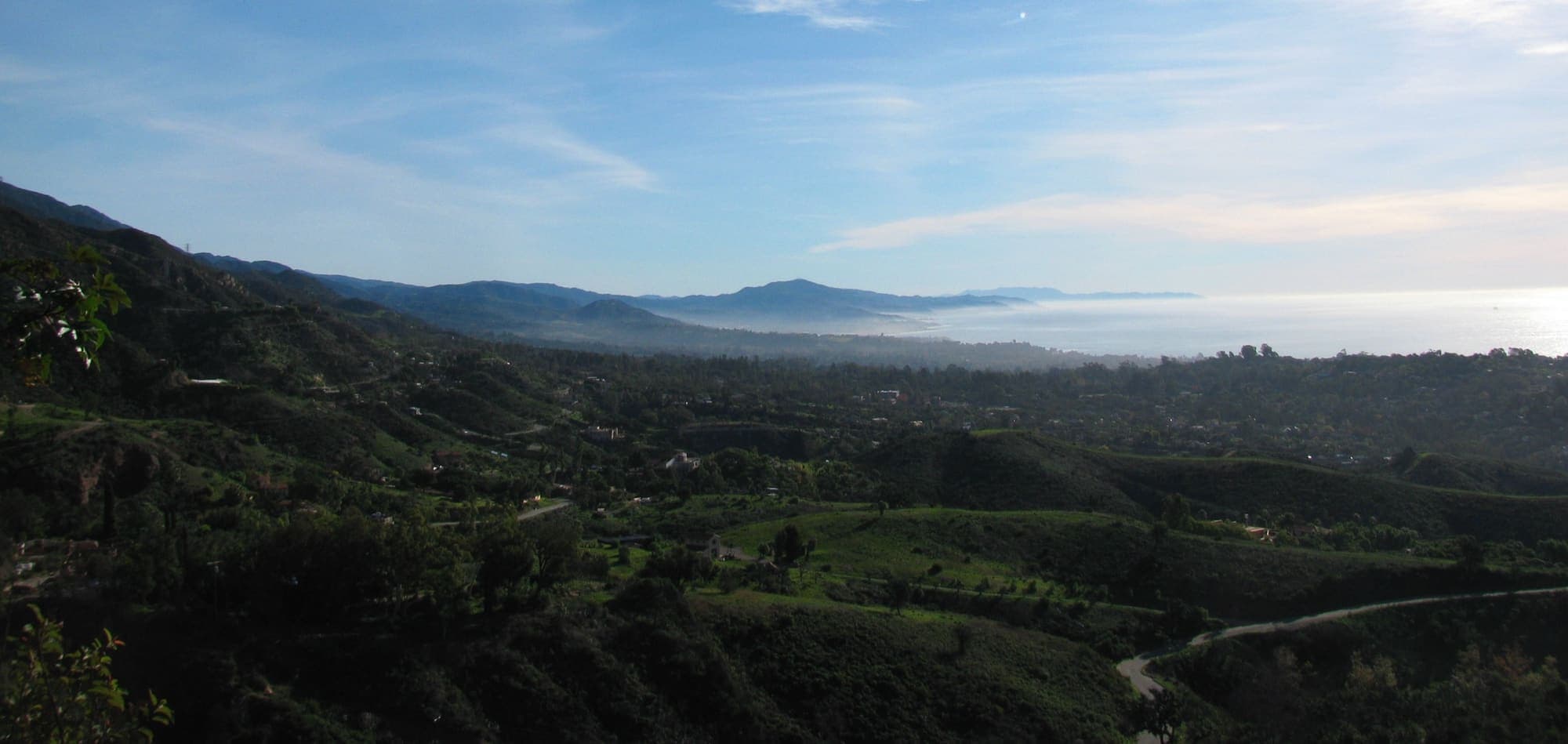
Montecito is the legacy estate market for coastal Southern California. Hot Springs Road, Channel Drive, Park Lane, the upper village — the names are precise because the neighborhoods within the neighborhood matter. The architecture skews Spanish revival, English country, and a thoughtful contemporary minority. The provenance and the privacy are the product.
Who lives here
Ultra-high-net-worth primary residents, second-home buyers from the East Coast and the Bay Area, working creatives who can structure their work to be wherever they want. The Montecito buyer is sophisticated, expects discretion, and treats the agent relationship as a multi-decade arrangement.
What to know
Three things. First, the fire-debris-flow risk after the 2018 events is a real and ongoing planning factor — buyers should review a property's geotechnical history specifically. Second, water rights and well capacity vary substantially by parcel; what the seller represents is rarely sufficient diligence. Third, the property tax assessment basis carries substantial weight at this price tier; a long-held property reassessed at sale can carry a tax bill many multiples of what the seller has been paying.
Market character
Montecito is a legacy market — most trades happen between buyers who already know the area and sellers who already know who the natural next owner is. Off-market percentage is high. Time-on-market for top-of-market product can stretch to six or twelve months not because the property is unwanted but because the seller is patient. The traditional MLS represents a fraction of actual transaction velocity.
What the data says.
A few figures worth knowing before you tour Montecito — drawn straight from the U.S. Census, not estimated. Numbers tell the truth; these are the ones that actually matter to a buyer.
Montecito is an unincorporated community — a Census-designated place, not a city. The figure covers the full CDP, from the upper village down to Channel Drive.
An older, established community — consistent with a market of long-tenured owners and second-home buyers rather than first-time households.
Among the highest in California. Even so, a household-income median understates the Montecito estate buyer, much of whose net worth sits outside of W-2 income.
Roughly three in four occupied homes are owned. The renter share is higher than you might expect at this price tier — guest houses, estate cottages, and longer-term leases.
There is no single dominant era here. About a third of the housing stock predates 1960, with meaningful cohorts from every decade since — which is why provenance, not a build-year comp, drives value.
Source: U.S. Census Bureau, American Community Survey 2024 5-year estimates (2020–2024). Figures describe Montecito CDP.
The places I’d send you.
A short, curated list of the places I'd point a client toward — the established Coast Village Road habits and quiet corners that help Montecito start to feel like home.
An espresso bar at the Montecito Country Mart on Coast Village Road, pairing a full espresso program with fresh-baked organic pastries and breakfast snacks.
The crescent of sand below the Biltmore is Montecito's signature stroll — quiet at low tide, with the Channel Islands on the horizon and the foothills at your back.
A long-running Montecito breakfast-and-lunch institution on Coast Village Road, first-come first-served, known for its breakfast burrito and a relaxed midday menu.
A traditional, seasonally driven Italian restaurant in a two-story building on Coast Village Road — a refined but neighborhood-feeling choice for a proper evening.
A roughly two-hour loop off East Mountain Drive into the Santa Ynez foothills, with views that sweep from Oxnard to Refugio and all of Montecito laid out below.
A long-established butcher-style deli, cheese, and wine shop in Montecito's Upper Village — the everyday provisions stop for sandwiches, cheese, and a bottle.
A 37-acre botanical estate just minutes from the village, open by reservation Wednesday through Saturday in season — an easy, memorable weekend outing close to home.
Nothing listed in Montecito right now.
I don’t have an active listing in Montecito at the moment. Off-market work and pre-MLS introductions happen here regularly — if you’re considering buying or selling, we can start with a conversation.
Begin a conversation→Common questions.
What's the difference between Hope Ranch and Montecito proper?
Hope Ranch is technically a separate adjacent community — gated, equestrian-oriented, larger parcels, slightly less amenity density. Montecito has the upper village and lower village walkable cores; Hope Ranch is purely residential with private trails and beach access. Buyers usually have a clear preference between gated-equestrian (Hope Ranch) and walkable-village (Montecito) by the time they tour.
Are the post-2018 debris flow risks priced into Montecito values?
Largely yes, with substantial variation by location. Properties in the highest-risk flow paths (Cold Springs, Romero Canyon downstream zones) carry persistent insurance and underwriting friction. Properties on the upper benches above the flow paths recovered fully and trade at pre-event highs. Geotechnical review is mandatory before any offer.
How does the off-market market work in Montecito?
By relationship. Listings agents and buyer's agents who specialize in Montecito carry meaningful pocket inventory — properties that are 'available to the right buyer' but not on MLS. Access requires either established representation or a verifiable buyer credential (proof of funds, often before any showing). It's not gatekeeping for its own sake; it's how the sellers prefer to transact.